
 Written by
 SON OF THE SOIL: Every Road Leads to Blood
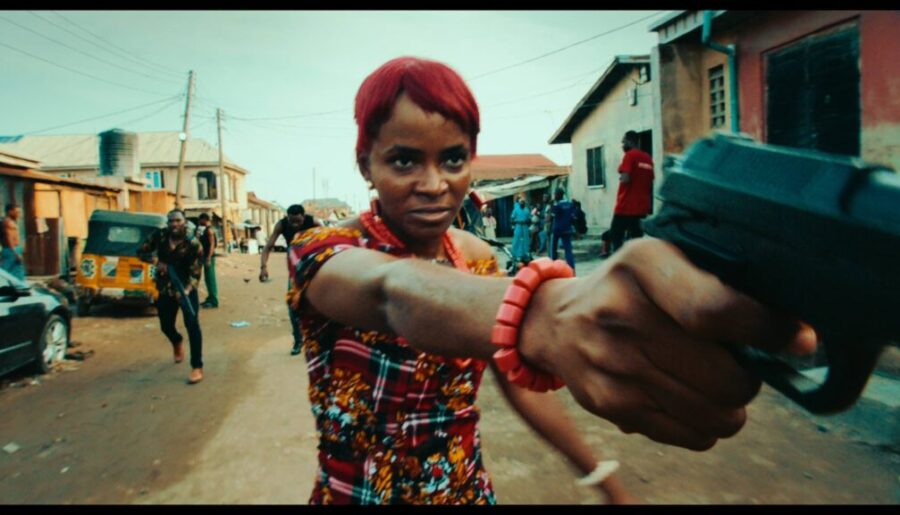
Revenge and redemption fatally collide battering the noir thriller into the sweaty heat and chaos of festering Lagos slums. It’s a brutal world where Bad fights Evil and hope bleeds.
Buy SON OF THE SOIL here on Amazon now.
Nigerian soldier Zion Ladejo, haunted by his past, returns home after his sister’s tragic death. Determined to uncover those responsible, he embarks on a vengeful path, while seeking redemption for his own actions.
Creators and Cast: Directors Chee Keong Cheung; Cast Razaaq Adoti, Sunshine Rosman, Philip Asaya
SON OF THE SOIL: Every Road Leads to Blood
Some films arrive with polished smiles and festival-ready sincerity. Son of the Soil walks in wearing muddy boots, dried blood under its fingernails, and the thousand-yard stare of someone who’s seen too much and forgotten nothing. It isn’t interested in reassuring you that humanity is fundamentally decent. It suspects humanity pawned that idea for stale bread years ago.
What unfolds is less a conventional drama than a collision of damaged lives moving through the same unforgiving landscape, each carrying enough guilt to sink heaven. The slums are festering, the countryside isn’t picturesque. It’s a place where every scabby alley and parched field seems to conceal another bad decision, every dirt road another ghost refusing to stay buried.
The film understands something that the best crime stories always know: geography is destiny. Not because the land determines who people become, but because escaping the land is usually more expensive than anyone can afford.
That makes Son of the Soil feel spiritually related to Alejandro González Iñárritu’s Amores Perros. Not because it copies its structure or reaches for the same stylistic fireworks, but because it shares that bruising conviction that lives don’t merely intersect—they collide. Chance isn’t random. It’s a weapon.
One impulsive decision detonates across families, friendships and futures, creating shockwaves that keep expanding long after the original explosion has disappeared over the horizon.
The characters don’t make mistakes so much as inherit them.
Every conversation carries the weight of previous generations. Fathers fail sons. Sons become fathers before they’ve figured out how not to repeat the pattern. Mothers patch together emotional wreckage with the quiet efficiency of field surgeons working without anaesthesia. Nobody escapes history. They merely rent it for another day.
There’s a grim elegance to the screenplay’s refusal to manufacture heroes. Everybody’s compromised.
Even acts of kindness arrive carrying invisible invoices.
That’s refreshing.
Too many modern dramas mistake moral certainty for emotional complexity. They hand audiences neat ethical diagrams with clearly labelled villains and victims. Son of the Soil isn’t interested in diagrams. It offers stains instead.
The cinematography embraces this ambiguity with almost nervous, predatory impatience. The camera barely lingers long enough to let silence become uncomfortable before cutting away. Landscapes stretch toward impossible horizons, but freedom always remains just outside the frame. Even daylight feels contaminated, as though the sun itself has witnessed too much and decided to stop taking sides.
Darkness isn’t merely the absence of light here.
It’s accumulated memory.
There’s a noir heartbeat beneath everything. Classic film noir trapped morally compromised people
inside cities of rain-soaked asphalt and neon. Son of the Soil relocates that fatalism to slums, open country, and rivers, proving that any space can become a prison. The bars are invisible. They’re built from obligation, resentment, poverty and family expectation instead of steel.
Violence, when it erupts, isn’t choreographed as spectacle. It arrives suddenly, awkwardly, almost embarrassingly. Nobody looks cool getting hurt. Nobody delivers witty speeches while bleeding. The body remembers every impact long after the audience has moved on to the next scene.
That’s where the film earns its emotional credibility.
Pain has consequences.
Cinema often forgets that.
There’s a temptation when discussing films like this to invoke Quentin Tarantino simply because crime, fractured chronology or bursts of brutality enter the conversation. That’s missing the point. Tarantino’s violence is frequently performative, stylised, steeped in cinema itself—a hall of mirrors reflecting decades of genre history. Son of the Soil heads in the opposite direction. If Tarantino asks what violence looks like in movies, this film asks what movies usually leave out after violence ends.
Who explains the absence of the dead?
Who wakes up next Tuesday still carrying yesterday’s catastrophe?
The performances understand that understatement often cuts deeper than emotional fireworks. Faces become landscapes every bit as expressive as the countryside surrounding them. A glance across a table communicates decades of disappointment. A hesitation before opening a door contains enough tension for an entire thriller.
Nobody seems to be acting.
They simply appear trapped inside lives that continue whether cameras are present or not.
That’s harder than flashy performance.
The supporting cast deserves particular recognition because they populate the margins with fully realised human beings rather than convenient narrative furniture. Every bartender, neighbour, mechanic and relative feels like the protagonist of another story unfolding just outside the frame. You leave the film believing the world continues after the credits because it seemed to exist before the opening scene. That illusion is incredibly difficult to create.
The editing resists modern hyperactivity. It trusts audiences to connect emotional dots without constant explanation. Scenes end unexpectedly. Conversations remain unfinished. Information arrives sideways instead of through exposition dumps. Like memory itself, the narrative accumulates gradually until seemingly unrelated fragments suddenly lock together with devastating clarity.
It’s a film that respects patience.
Rewardingly so.
The score knows when silence can outperform an orchestra. Music appears sparingly, never begging for tears or announcing significance with oversized emotional punctuation marks. When it does emerge, it feels less like accompaniment than another character wandering through the same emotional wasteland.
Nothing feels manipulative.
Everything feels earned.
The film occasionally threatens to disappear beneath the weight of its own seriousness. There are stretches where despair accumulates so relentlessly that one longs for even a brief moment of levity— not to undermine the drama, but to remind us why these characters continue fighting at all. Hope doesn’t need to triumph. It simply needs to exist
Sometimes Son of the Soil seems reluctant to admit that possibility.
Yet perhaps that’s precisely the point.
Communities shaped by generational hardship don’t experience redemption as a cinematic climax. They experience survival one ordinary morning at a time. Another meal. Another conversation. Another day without catastrophe. The film understands that resilience isn’t glamorous. It’s repetitive.
Almost boring.
Until you realize boredom is exactly what people who’ve lived through chaos dream about.
Like the greatest neo-noirs, Son of the Soil ultimately becomes less interested in solving problems than exposing systems that manufacture them. Individuals make terrible choices, certainly. But those choices rarely emerge from empty space. They’re cultivated by economic pressure, inherited trauma, masculine pride, emotional illiteracy and communities where asking for help still feels like admitting defeat.
Nobody falls alone.
Everybody lands on someone else.
That recognition gives the film unexpected compassion beneath its hard exterior. Cynicism is easy.
Understanding is much harder. Son of the Soil never excuses destructive behaviour, but it constantly searches for its origins. That’s a distinction too many contemporary dramas abandon in pursuit of simplistic outrage.
The result is a film that lingers long after its final image. Not because it delivers shocking twists or quotable dialogue, but because it leaves emotional residue. You find yourself reconsidering earlier scenes hours later, noticing invisible threads connecting people who believed themselves isolated. Like tyre tracks across wet earth, every action remains visible long after the vehicle has disappeared.
Good films entertain.
Very good films disturb.
The rarest films quietly rearrange how you think about consequence.
Son of the Soil belongs comfortably in that final category. It is uncompromising without becoming nihilistic, emotionally bruising without descending into misery tourism, and ambitious enough to trust audiences with complexity instead of comforting them with certainty.
By the time the credits roll, the landscape hasn’t changed.
Neither have most of the people living on it.
But you have.
Rating: 4 out of 5 stars.
Availability
SON OF THE SOIL is available now
Buy your own here on Amazon; SON OF THE SOIL
(Thank you, we may earn a small commission for the link; it helps us produce more content)
The post SON OF THE SOIL Movie Review first appeared on World of Martial Arts | WOMA.