
 Written by
 By Peter Lim Tian Tek
Taijiquan is enjoyed by myriad people both as an exercise and a martial art. The benefits of its rich content are best derived by practicing it as both.
1. The Taijiquan 13 Postures And The Circle
The 13 Postures (Shi San Shi~十三势) of Taijiquan are the fundamental techniques of this martial art. Each technique describes how an opponent’s incoming force and structure are overcome. All are from different parts of a circle.
The Chinese world view divides nature into the 8 basic changes and into the 5 Elements. The universe can be understood and controlled through them.
The 13 Postures are comprised of the 8 Gates (Ba Men~八门) and the 5 Steps (Wu Bu~ 五步). The 8 Gates follow the 8 Trigrams (Ba Gua~八卦)that are the permutation of 3 broken and unbroken set of 3 lines. The 5 Steps follow the 5 Elements and their directions.
One way to help in understanding them is to experience them through playing with Taiji exercise balls by rolling them against each other in the palm of the hand.
They are also practiced as in two man push hands training.
2. Force Structure
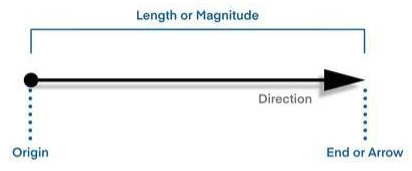
Forces have an origin and focus (usually the head of the force). The strongest is at the head and weakest at the origin. In Taijiquan, we avoid resisting the incoming force but blend and redirect it behind it’s focal point
Figure 1 ~ Force Structure
There are 4 facing gates representing the 4 techniques to control the centre of mass and there are 4 corner techniques that can return such control should you lose it.
Ward Off (Peng~掤)
Figure 2~Ward Off
Makes use of Ward Off Energy (Peng Jing~掤劲) which is a upward and outward energy that redirects it away.
Figure 3 ~The Qian Trigram
It represents the (乾~Qian) trigram with 3 unbroken lines that can support a force away.
Roll-back (Lu~捋)
Figure 4 ~ Roll-Back
Makes use of Roll-back Energy (Lu Jing~捋劲) which is a horizontal inward swivelling energy that causes it to fall into emptiness away from the centre of mass.
Figure 5 ~ The Kun Trigram
It is represented by a trigram with 3 broken lines (Kun~坤) representing the emptiness that it seeks to direct the incoming force to.
Squeeze (Ji~挤)
Figure 6i ~ Squeeze
Makes use of Squeeze Energy ( Ji Jing~挤劲)which is a horizontal directional energy that squeezes the force structure against the opponent’s centre of mass.
Figure 6ii ~ The Kan Trigram
It represents the trigram with broken lines above and below an unbroken line (Kan~坎), showing how it directly seeks the centre of mass through layers of softness to control it.
Push (An~ 按)
Figure ~ 7 Push
Makes use of Push Energy (An Jing~按经) which circles downwards and pushes/presses on the opponent’s centre of mass causing an uprooting bounce reaction. Some writings refer to this a
Press (Na~捺)
Figure 8 – The Li Trigram
It is represented by a trigram with unbroken lines above and below a broken one Li~离) showing how it uses the surrounding softness as a spring against the centre of mass.
Pluck (採~Cai)
Figure ~ 9 Pluck
Makes use of Plucking Energy (Cai Jing~採劲 a downward plucking force like plucking a branch off a tree.
Figure 10 ~ The Dui Trigram
It is represented by a trigram with two unbroken lines on top and a broken line at the bottom (Dui~巽) showing that emptiness can weaken the force by breaking it’s structure through bending it into emptiness.
Split (挒~ Lie)
Makes use of Split Energy (Lie Jing~挒劲), which is a scissor-like energy in two opposed directions, usually applied at a joint. This is followed by a blow in the Great Roll-back (Da Lu~大捋) push hands practice. It shows the Raise Hands Upward (Ti Shou Shang Shi~提手上式) posture and also in the Hand Strums The Lute (Shou Hui Pi P~手挥琵琶)posture in the form.
Figure 10 ~ The Li Trigram It is represented by a trigram with a broken top line and two unbroken lines below (Lie~离), indicating the two force directions that break apart the force structure.
Elbow (Zhou~肘)
Figure 11 ~ Elbow
Makes use of Elbowing Energy (Zhou Jing~肘劲) which is usually a short jab with the elbow.
Figure 12 ~ The Zhen Trigram
It is represented by a trigram with one broken lines atop two unbroken line (Zhen~震) which shows the Elbowing breaking through the softness to attack the centre of mass which is supported by the root.
Shoulder Bump/Lean 5 (Kao~靠)
Figure 13 ~ Shoulder
Makes use of Shouldering Energy (Kao Jing~靠劲), which directly acts against the opponent’s centre of mass.
Figure 14 ~ The Gen Trigram
It is represented by a trigram with one unbroken line on top of two broken lines (Gen~艮) showing how the centre of mass being moved without going to the root by this shouldering/leaning force
Advance (Chien Jing~前近) Closes the distance to the opponent through advancing forward like a quickly burning Fire element.
Figure 16 ~ Advance
Retreat Backwards ( Hou Tui~ 后退)
Increasing the distance from the opponent by going backwards, like a quickly retreating tide of the water element.
Figure 17 ~ Retreat Backwards
Be Aware Of The Left (Zou Gu~ 左顾)
Be aware of what is on the left, one of the two keys to lateral mobility. The left faces the opponent’s right side, which is usually stronger and can cause more harm, like a hard metal element.
Figure 18 ~ Be Aware of The Left
Guard The Right (Yu Pan~右盘)
Figure 19 ~ Guard The Right
To be on guard to the right is the other key to lateral mobility. The opponent’s left is usually weaker, and so be on guard against techniques rather than a stronger force like a flexible wood element
Fixed 捋 (Zhong Ding~中定)
Figure 20 ~ Central Equilibrium
To be centred to cope with all directions. This means to guard the centre of mass, which is of primary importance, hence Yang Chengfu nicknaming his eldest son Shouchung (Shou Zhong~守中, which means to defend the centre as it is the rooted Earth element.
Taijiquan Training Rationale Watching the practitioners training in the most common mode of execution, it seems almost counter-intuitive that a martial art could be so soft, slow and so like swimming in air yet claim to be stable, effective and efficient, and even proven historically to have never been beaten in a fight. A common boxing maxim is that in a fight, one must be fast, stable, accurate and ferocious (Yu Ren Xiang Po, Qui, Wen, Zhun, Hen~于人相搏:快,稳,准,狠) to be victorious. Taijiquan beats fast with slow through its listening touch that can detect structure and placement in the opponent accurately, beyond what can be seen. Dead double weighting stability with lively stability from non-double rooting. Ferociousness through calm, focused intellect. Earning the opponent’s respect and not his enemity. Swimming in air trains the body to be sensitive to light stimuli in the air, and to gravity, to keep one’s balance even when the eyes are closed.
3. Internal And External Training
A common boxing maxim states: ” External trains refined strength (Jing~劲), bone (Gu~骨), skin (Pi~皮). Internal trains a mouthful of breath/energy (Qi~气). [Wai Lian Jing, Gu, Pi. Nei Lian Yi Kou Qi~外练劲,骨, 皮。內练一口气].
This describes the generation and use of refined/effective/efficient strength as opposed to brute force (Li~力), building strong bones and toughening the skin in external/visible/obvious training. Strengthening the breath and increasing energy/vitality for internal/non-obvious training.
Smooth blow delivery without retaining tension beyond holding the structure to maintain the force transmission is one of the ways of training such refined strength.
Xing Yi Quan has a Crushing Fist (Beng quan~崩拳) that likens this internal punching to firing an arrow from the 5 bows of the body (2 legs, 2 arms and back) but leaves the joints relaxed (unlike some external boxing styles). The energy of the blow is completely transmitted to the target for maximum effectiveness. This is similar to Taijiquan’s Deflect, Parry and Punch technique.
Muscular strength is usually built using dynamic tension and weight exercises like in the Shaolin Muscle Change Classic (Shao Lin Yi Jin Jing~少林易筋经).
The bones are also trained by increasing the circulation in them and compressing them through muscular tension exercises, like in the Shaolin Marrow Washing Classic (Shao Lin Xi Shui Jin~少林洗髓经) and Iron Palm (Tie Sha Zhang~铁沙掌), which also toughens the skin via impact and friction.
Blows from such external strikes result from impact forces from the knitting of the bones (Gu Jie Fa Li~骨结发力) used in the blow, resulting in the braking of the enemy’s bones and the bruising of his body as described in this Wing Chun (an external martial art) maxim. This allows for force transmission even over short distances like Wing Chun’s famed punching using 1 inch refined strength (Cun Jing~寸劲).
Taijiquan, as a martial art, focuses more on internal striking, though it is capable of both internal (e.g. using palms, redirecting forces/energies, etc) and focused external strikes (e.g. punches, chops, elbow/shoulder strikes, kicks, etc).
Internal blows affect the whole body by physical damage, trapping limbs, disrupting the balance, coordination and the vitality/energy flow and ventilation.
Some Taijiquan writings call this helpless tangled outcome of the opponent as “the fat pig hung in the net” (Fei Zhu Gua Wang~肥猪挂网).
Sticky energy (Nian Jing~粘劲) that keeps in contact with the opponent without dropping away or resisting (Bu Diu Bu Ding~不丢不顶) is necessary. This contact that senses/listens (Ting Jing~ 听劲) to the structure, flow and centre is what allows some masters like Yang Shouzhong to have “magnetic hands” that can blend with, guide and control the opponent’s movement without breaking contact or resisting. Each of the 8 Gate technique energies has this sticky energy characteristic.
The 3 elements internal to the body consist of Essence (Jing~精), Breath (Qi~气) and Intent/spirit (Shen~神).
Internal training strengthens all three elements for superior health and martial capability.
Essence (Jing~精) is built up in the kidneys, more specifically the Adrenal Glands, which secrete the metabolic hormones that increase the body’s work capacity.
Deep breathing into the lower abdomen massages the kidneys to generate more Essence. Deep breathing is also increased by these hormones (like ADP~Adenosine Diphosphate and ATP~Adenosine Triphosphate), which not only increases the body’s ventilation but also form a pump for the generated energy from the Elixer Field/centre of mass (Dan Tian~丹田) located there.
Coordinated with reverse breathing (breathing out when the exerting force outward and breathing in when exerting force inward), this energy flows through the body’s acupoint meridians. Vocalisations like ‘Heng’ (Heng~哼) when breathing in and ‘Ha’ (Ha~哈) when breathing out make the generated force/energy more effective.
This energy is directed by mental intent, which also powers the deep breathing. Some researchers have claimed to detect the Qi emitted by qigong practitioners as a fine stream of electrons. Such emissions can affect the Qi flow in another’s body, opening up another avenue for treatments or defence/attacks.
My own teacher, to show me what Qi felt like, once touched my arm and made me feel as if the arm was filled with blood.
Mental intent is trained by focusing on directed movements through how they feel (like the name of the internal martial Xing Yi Quan~Form Will Boxing), which also increases overall awareness of one’s own body and the opponent’s.
Increasing the body’s energy and blood flow also leads to better body structural durability and can be a part of the training to achieve Iron Shirt (Tei Bu Shan~铁布衫) and Golden Bell Cover (Jin Zhong Zhao~ 金钟罩) protection. This is combined with Patting/Hitting Training (Pai Da Gong~ 拍打功)to get such invulnerability.
4. Double Rooting And Double Weighting
Double Weighting is when the weight of the body is divided between the two feet. Double rooting is avoided when the force from the body is directed to only one foot via internal structural alignment.
Figure 15 ~ Double weighted but not Double Rooted
Double Weighting can restrict mobility, while avoiding Double Rooting can promote it. The visible posture may not show which foot the root is in, despite the apparent weight distribution.
Like a ball with only one contact with the ground, a single root fully sunk yet connected to have the support from the ground via gravity and lower the centre of mass.
Hopping up and down does not fully obtain such force anchoring as the root is broken too quickly, usually by the hopping party themselves. Hopping mostly only utilises the body’s own inertia as the mass for force generation, not the mass of the ground. In my experience in sparring and fighting, I was able to channel the incoming blow to the ground while my hopping opponent(s) fell on the floor. They contributed to their own instability. This is only desirable if your martial art includes a lot of groundwork like Dog Boxing (Gou Quan~狗拳).
5. Threading Nine Pearls
The 9 pearls refer to the 9 joints of the body through which the energy flows, like a wave.
There are 3 joints of the legs in the foot, ankle and knees. 3 joints in the arms at the hand, wrist and elbow. 3 joints in the back at the hip, spine and shoulders. The 8 Trigram Palm (Ba Gua Zhang~ 八卦掌) also refers to the 3 joints in the back as the dragon back.
All nine are relaxed, aligned and coordinated, somewhat like 9 engines generating and amplifying forces that are rooted to the ground and added to at each joint. This whip-like motion can also be transmitted to weapons to shake them or to the joints in the opponent’s body. The joints are relaxed and loose (Song~松), something that Master Yang Chengfu placed great emphasis on. The soft tissues provide the connection to carry the strength.
It is because of this way of strength transmission that the opponent can feel as if he is pushing back against a column of water. He will find it difficult to detect the centre of mass and the root, as there is little or no hard structure.
•
Internal Strength Emissions (Nei Fa Jing~内发劲)
Internal strength emissions come from transmitting the energy of the blow into the opponent’s body instead of causing injury using the toughness of the bones and skin.
Internal strength emissions can cause circulation disruptions and impair the function of affected organs. These injuries can be much more serious than just bruising and broken joints and bones.
Mental intent causes expansion of the vessels similar to vasodilation to allow increased Qi flow to the focused area. Biofeedback has been proven to do this to blood vessels and can also cause localised temperature changes to the body, among other things.
•
Strength May Break, But Intent Does Not (Jing Duan Yi Bu Duan~劲断意不断)
Strength, even refined strength, may break, but not the intent that spawns it. The focused intent allows for the technique to be recovered and the attack/defence to continue. If we abandon the intent, then the technique is essentially lost and may allow the opponent to take the initiative and defeat you.
•
Hitting The Intent (Da Yi~ 打意)
Everyone has a perceptive bubble where we are aware of what is going on. Outside the perimeter of this sensory bubble, we are essentially deaf and blind.
By disturbing this perimeter, we can surprise the opponent and cause him to react the way we want to. Masters like Yang Shaohou (杨少侯) used to roar and use darting attacks to confuse and disrupt the concentration of his opponent, causing them to flounder.
Some teachers also groom their students to react in certain ways. This does not reflect true combat ability, as there are easier ways to cause harm, and any risk should be undertaken. Sometimes referred to as striking without contact or Empty Force (Kong Jing~空劲), it is usually used for healing.
There is little evidence that it will work against an unprepared opponent in a combat situation. There are no references to it in the Classics or reputable manuals. It is not a part of the art of Taijiquan.
Author Biography
Peter Lim Tian Tek is a renowned and prominent Singaporean martial arts researcher, practitioner and author, primarily known for his extensive work on the history and theory of Taijiquan (Tai Chi)
Martial Arts Expertise
• Taijiquan Research: He is the creator of the widely cited Peter Lim’s Taijiquan Resource Page, which serves as a digital archive for historical documents, classical translations, and technical articles on various Tai Chi styles.
• Diverse Training: He began training in qigong at age 8 and formally started martial arts at 9. His background includes Yang, Wu, Chen, and Wu Yu Xiang styles of Taijiquan, as well as Ba Gua Zhang and Wing Chun.
• Published Works: He has authored numerous articles on internal strength (neijing), combative principles, and the historical development of internal martial arts.
Professional Background
• Career: Professionally, he has worked as a Computer Systems Analyst for a multinational firm in Singapore.
• Education: He holds a Masters in Business (Information Technology) from Curtin University of Technology.
Thanks for reading, we hope you enjoyed it. Please LIKE, SHARE and don’t forget to SUBSCRIBE to World of Martial Arts Television for more great videos!!
The post Taijiquan Fundamental Combat Insights Explained first appeared on World of Martial Arts | WOMA.